

The Senior’s Guide to Understanding Fixed Income Without Feeling Limited
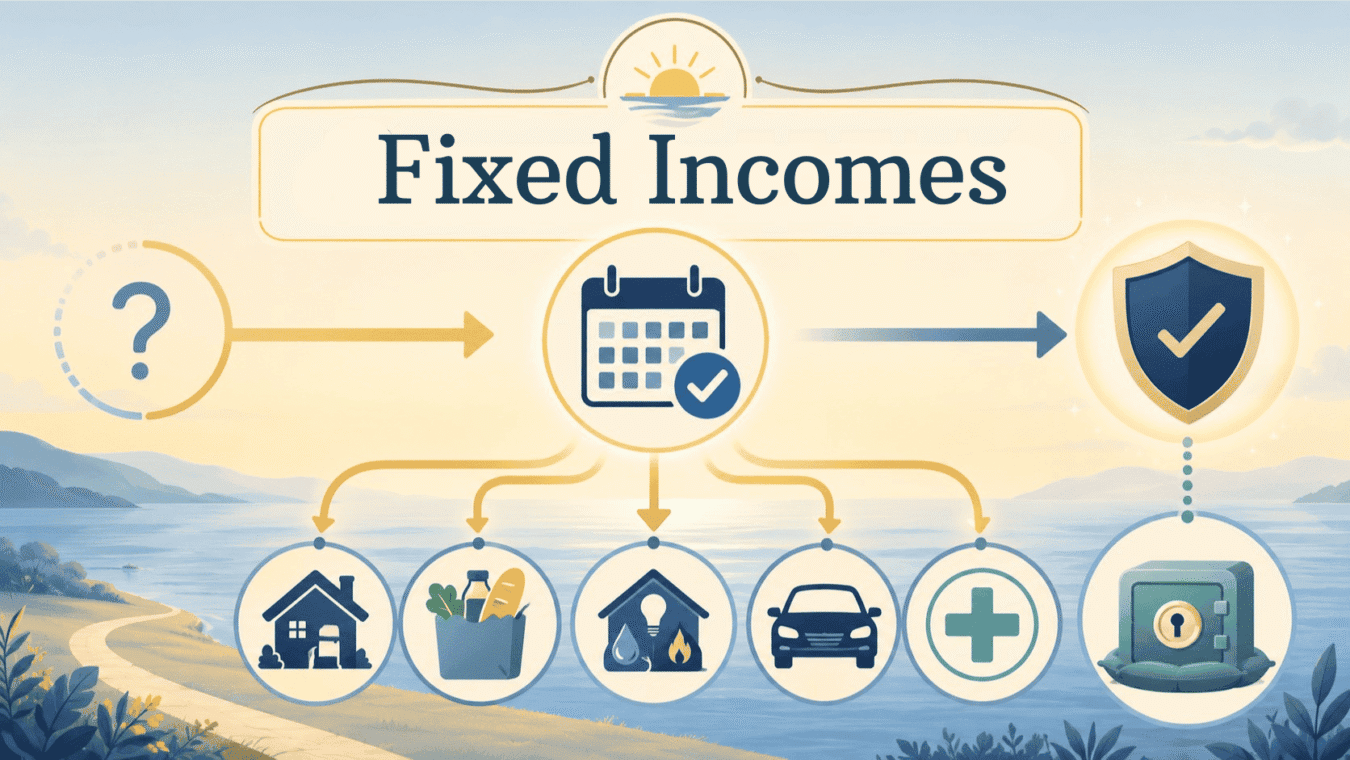
Living on a fixed income can feel uncomfortable at first.
After years of receiving a paycheck, retirement may bring a different kind of financial rhythm. Your income may come from Social Security, a pension, savings withdrawals, annuities, or other sources that arrive on a schedule. You may know what is coming in each month, but still wonder whether it will be enough for healthcare, housing, groceries, emergencies, and the life you want to enjoy.
The phrase “fixed income” can make retirement sound restrictive.
But fixed income does not have to mean fixed choices.
With clarity, planning, and regular review, you can understand your income, protect your essentials, and make decisions with more confidence and less stress.
What Does Fixed Income Mean in Retirement?
Fixed income usually means you receive a predictable amount of money on a regular basis.
For many retirees, this may include:
- Social Security
- Pension payments
- Annuity payments
- Scheduled retirement account withdrawals
- Rental income
- Other recurring benefits or income sources
The benefit of fixed income is predictability.
You can often know what will arrive and when.
The challenge is that your expenses may not always stay fixed. Groceries, insurance, utilities, housing, healthcare, and transportation can change over time.
That is why understanding fixed income is not just about knowing the amount. It is about knowing how that income supports your real life.
Fixed Income Is Not a Personal Failure
Some seniors feel embarrassed when they hear the words “fixed income.”
They may think it means they have fewer options, less control, or less financial value.
That is not true.
Fixed income simply describes how money arrives during retirement. It does not describe your worth, your intelligence, your independence, or your ability to make good decisions.
Many retired adults live successfully on fixed income because they understand:
- What comes in each month
- What must be paid first
- Where flexibility exists
- What risks need attention
- When to ask questions
- When to review the plan
Confidence comes from clarity, not from having unlimited income.
Start With Your Monthly Income Picture
The first step is to understand your reliable monthly income.
Write down each income source and when it arrives.
Ask yourself:
- How much Social Security do I receive?
- Do I receive pension income?
- Do I receive annuity income?
- Do I take money from savings or retirement accounts?
- Does any income change if my spouse passes away?
- Is any income temporary?
- Is any income affected by taxes?
- Are payments monthly, quarterly, or irregular?
This helps you see your foundation.
Once you know your reliable income, you can begin to organize expenses with less uncertainty.
Separate Essential Expenses From Flexible Spending
Not every expense has the same priority.
Essential expenses should usually come first.
These may include:
- Housing
- Utilities
- Groceries
- Transportation
- Healthcare premiums
- Prescriptions
- Insurance
- Taxes
- Debt payments
- Basic home maintenance
Flexible spending may include:
- Dining out
- Gifts
- Travel
- Hobbies
- Entertainment
- Extra subscriptions
- Non-urgent home projects
- Family financial help
This does not mean flexible spending is unimportant.
Enjoyment matters in retirement.
But when you understand the difference between essential and flexible expenses, you can make choices that protect your stability without feeling like everything is being taken away.
Watch for Expenses That Are Not Fixed
Even if your income is fixed, your expenses may change.
Review costs that may rise over time, such as:
- Health insurance premiums
- Prescription costs
- Dental, vision, or hearing care
- Homeowners or renters insurance
- Property taxes
- Rent
- Utilities
- Groceries
- Transportation
- Home repairs
- Car repairs
This is one reason a yearly review is important.
A budget that worked two years ago may need adjustment today.
Build Breathing Room for the Unexpected
Fixed income can feel stressful when there is no room for surprises.
That is why an emergency cushion matters.
Unexpected expenses may include:
- Medical bills
- Dental work
- Car repairs
- Home repairs
- Insurance deductibles
- Family emergencies
- Temporary caregiving support
Even a small cushion can reduce panic.
The goal is not to prepare for everything. The goal is to avoid having one surprise disrupt your entire retirement plan.
Avoid Feeling Trapped by the Word “Fixed”
A fixed income plan can still include flexibility.
You may have options such as:
- Reviewing expenses
- Adjusting flexible spending
- Using savings carefully
- Comparing insurance costs
- Applying for eligible benefits
- Reviewing housing costs
- Reducing unnecessary subscriptions
- Planning large purchases ahead of time
- Asking for help before a problem grows
The key is to make adjustments early, not only after stress appears.
Fixed income does not mean you cannot make changes. It means the plan should be managed with intention.
Be Careful With Pressure-Based Advice
Some people may try to make seniors feel afraid about fixed income.
Be cautious if someone says you must act immediately, move your money quickly, buy a product without review, or share personal information before you understand the recommendation.
Before making a decision, ask:
- What does this cost?
- What are the risks?
- How does this affect my monthly income?
- What happens if I need access to my money?
- How does this affect my spouse or family?
- Can I take time to review it?
You deserve clear answers.
A respectful process should not make you feel rushed.
Review Your Fixed Income Plan Every Year
Your fixed income plan should not stay frozen.
Review it at least once a year and after major life changes.
Look at:
- Income sources
- Essential expenses
- Healthcare costs
- Housing costs
- Insurance changes
- Emergency savings
- Debt
- Family support
- Beneficiaries
- Documents
- Long-term needs
A yearly review can help you stay aware, prepared, and confident.
Final Thoughts
Understanding fixed income does not mean accepting a limited life.
It means knowing your income, protecting your essentials, planning for changing costs, creating breathing room, and making thoughtful choices with the resources you have.
Fixed income can feel restrictive when it is unclear. But when it is organized, reviewed, and connected to your real needs, it can become a tool for stability and peace of mind.
At EduFuture Foundation, we believe financial education should be simple, respectful, practical, and pressure-free. Our mission is to help older adults and families make informed decisions with dignity, confidence, and clarity.
To learn more about our educational programs, seminars, and financial counseling resources, visit edufuturefoundation.org.