

Common Social Security Mistakes That Can Affect Your Retirement
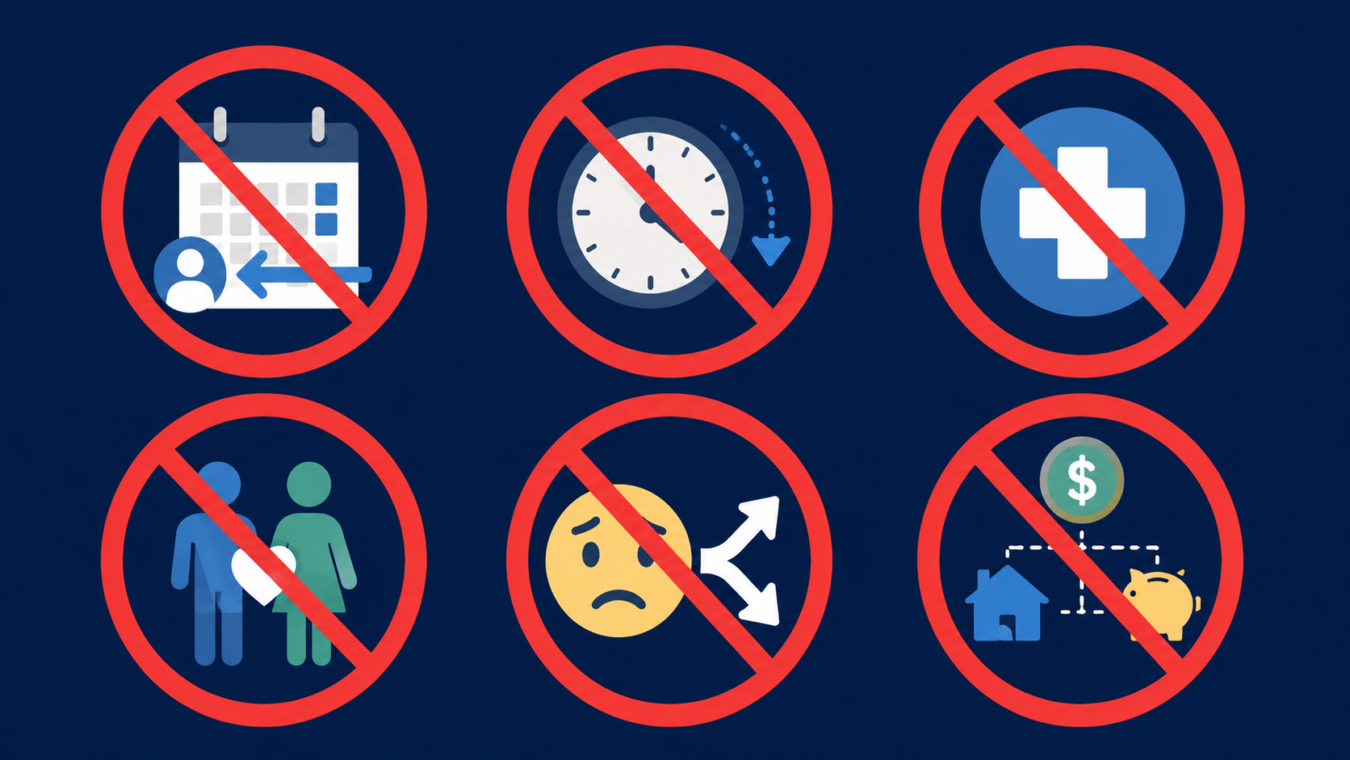
Social Security is one of the most important retirement income sources for many Americans. But deciding when and how to use it can feel confusing.
You may hear different opinions from friends, family, coworkers, or online sources. Some people say to claim as early as possible. Others say to wait as long as you can. Some focus only on the monthly benefit amount, while others worry about healthcare, taxes, work, or a spouse.
The challenge is that Social Security is not just a simple monthly check. It is part of your larger retirement income plan.
Avoiding common mistakes can help you make a more informed decision and protect your long-term stability.
Mistake 1: Claiming Too Early Without Understanding the Tradeoff
You can generally begin receiving Social Security retirement benefits as early as age 62. However, claiming before full retirement age usually means your monthly benefit will be reduced. (Social Security)
For some people, claiming early may make sense. You may need income right away, have health concerns, or be unable to continue working.
But the mistake is claiming early without understanding how it affects your monthly income later.
Before claiming early, ask:
- Do I need this income immediately?
- Can I cover my essential expenses without it?
- How will a lower monthly benefit affect me later?
- Do I have other income sources?
- How would this decision affect my spouse or household?
Claiming early is not always wrong. But it should be a clear decision, not a rushed one.
Mistake 2: Waiting Until 70 Without Considering Your Real Life
Delaying Social Security past full retirement age can increase your monthly benefit until age 70. After age 70, there is no additional increase for delaying retirement benefits. (Social Security)
Waiting may be helpful if you are still working, have other income, are in good health, or want a higher monthly benefit later.
But waiting is not automatically the best choice for everyone.
If delaying creates financial stress, forces you to use savings too quickly, or leaves you without enough monthly income, it may not fit your situation.
Before waiting, ask:
- What income will I use before Social Security begins?
- Am I using too much of my savings while I wait?
- How is my health?
- What are my spouse or household needs?
- Will waiting support my full retirement plan?
The goal is not to “maximize” Social Security in isolation. The goal is to make it work with your life.
Mistake 3: Ignoring Full Retirement Age
Your full retirement age is the age when you can receive your full retirement benefit amount. For people born in 1960 or later, full retirement age is 67. (Social Security)
Many people focus only on 62 or 70 and forget to understand their full retirement age.
This matters because full retirement age affects:
- Whether your benefit is reduced
- How work may affect benefits before full retirement age
- When delayed retirement credits begin
- How you compare different claiming options
Knowing your full retirement age gives you a clearer starting point for planning.
Mistake 4: Not Coordinating Social Security With Other Income
Social Security should not be planned separately from your other retirement income.
Your total retirement income may include:
- Pension benefits
- Retirement account withdrawals
- Personal savings
- Annuities
- Rental income
- Part-time work
- Other income sources
A common mistake is asking, “When should I claim Social Security?” without also asking, “How does it fit with everything else?”
For example, if you have a pension or savings, you may have more flexibility. If Social Security will be your main income source, timing may feel more urgent.
A better question is:
How will Social Security help create monthly stability with my other income sources?
Mistake 5: Forgetting About Healthcare and Medicare Timing
Social Security and Medicare are connected in people’s minds, but they are not the same decision.
You may claim Social Security before, at, or after Medicare eligibility. If you are not receiving Social Security when you turn 65, you may need to apply for Medicare separately. The Social Security Administration notes that delaying Medicare enrollment in some circumstances can increase medical insurance costs. (Social Security)
Before making a Social Security decision, ask:
- When will Medicare begin for me?
- Will I retire before age 65?
- What healthcare coverage will I have?
- What will premiums and out-of-pocket costs be?
- Am I covered through a spouse or employer plan?
Healthcare costs can affect how much monthly income you need from Social Security.
Mistake 6: Not Considering Your Spouse or Survivor Needs
If you are married, widowed, divorced, or supporting someone else, your Social Security decision may affect more than just you.
A claiming decision can influence household income, spousal benefits, survivor income, and long-term financial stability.
This is especially important when one spouse earned significantly more than the other or when one person depends heavily on the other’s income.
Before claiming, ask:
- How does this affect our household income?
- What happens if one spouse passes away?
- Are spousal or survivor benefits part of the picture?
- Does one person need stronger long-term income protection?
Social Security should be reviewed as a household decision when family is involved.
Mistake 7: Making the Decision Out of Fear
Many Social Security mistakes happen because people feel pressured.
They may claim early because they are afraid benefits will disappear. They may delay because they feel they “must” wait until 70. They may follow someone else’s advice without understanding their own numbers.
Fear is not a retirement strategy.
A clearer approach is to review:
- Your monthly income needs
- Your health
- Your work plans
- Your savings
- Your debt
- Your healthcare costs
- Your spouse or family situation
- Your long-term goals
The right decision should be based on your full retirement picture.
Final Thoughts
Social Security can play an important role in retirement, but common mistakes can affect your income, healthcare planning, spouse, savings, and long-term stability.
The best decision is not always the earliest one, the latest one, or the one someone else chose. It is the one that fits your life with clarity.
At EduFuture Foundation, we believe retirement education should be clear, practical, and pressure-free. Our mission is to help individuals and families understand their options before making important retirement decisions.
To learn more about our educational programs, seminars, and financial counseling resources, visit edufuturefoundation.org.