

How to Build a Monthly Money Routine That Makes Retirement Less Stressful
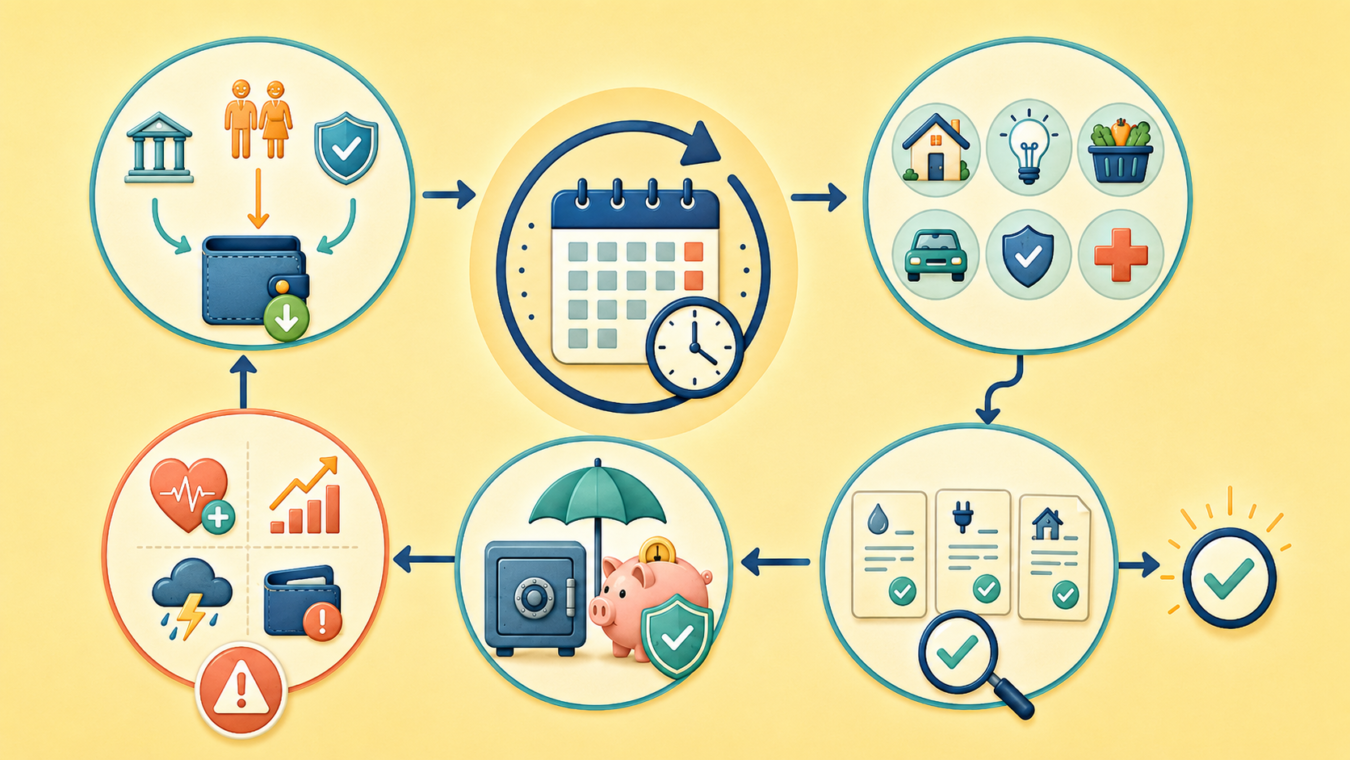
Retirement can feel less stressful when money has a rhythm.
Many seniors worry because bills arrive at different times, healthcare costs change, groceries get more expensive, and income may come from several sources instead of one paycheck. Even when there is enough money, not knowing what is coming in, what is going out, or what needs attention can create anxiety.
A monthly money routine helps you stay organized without making retirement feel like a full-time job.
The goal is not to track every penny perfectly.
The goal is to create a simple habit that helps you understand your income, cover essentials, protect savings, notice changes early, and make decisions with more confidence.
Why a Monthly Money Routine Matters in Retirement
During your working years, your paycheck may have created a predictable structure.
In retirement, income may come from:
- Social Security
- Pension payments
- Retirement account withdrawals
- Annuity payments
- Rental income
- Part-time work
- Other recurring income
These sources may arrive on different days and may not always increase at the same pace as your expenses.
A monthly routine gives you a clear moment to review your financial life before small issues become stressful.
Choose One Day Each Month
Start by choosing one day each month to review your money.
It could be:
- The first Monday of the month
- The day after Social Security arrives
- The same date every month
- A quiet morning when you are not rushed
- A day when most bills are visible
The best routine is one you can repeat.
You do not need to spend hours. Even 30 to 45 minutes can help if the process is simple and consistent.
Step 1: Review What Came In
Begin with income.
Look at what arrived during the month and what you expect next month.
Review:
- Social Security deposit
- Pension income
- Retirement account withdrawal
- Annuity payment
- Part-time income
- Rental income
- Other benefits or recurring payments
Ask:
Did everything arrive as expected?
If something is missing, delayed, or different, it is better to notice early.
This step helps you feel grounded because you know what income is actually available.
Step 2: Review Essential Expenses
Next, review the bills that must be paid first.
Essential expenses may include:
- Housing
- Utilities
- Groceries
- Transportation
- Insurance
- Healthcare premiums
- Prescriptions
- Taxes
- Debt payments
- Basic home maintenance
Ask:
- Were all essential bills paid?
- Did any bill increase?
- Did any automatic payment change?
- Is anything due soon?
- Is there a bill I need help understanding?
This step protects your foundation.
If essential expenses are rising, you can adjust before the pressure becomes bigger.
Step 3: Check Healthcare Costs
Healthcare should have its own place in your monthly routine.
Even with Medicare, costs may change.
Review:
- Premiums
- Copays
- Prescription costs
- Dental expenses
- Vision expenses
- Hearing needs
- Transportation to appointments
- Medical bills
- Insurance notices
Ask:
Is this a normal monthly cost, or is this a new pattern?
One unexpected medical bill may be manageable. Repeated healthcare increases may require a larger review of your plan.
Step 4: Look at Cash Flow
Cash flow simply means what came in compared to what went out.
You do not need a complicated spreadsheet.
Ask:
- Did I spend more than I received?
- Did I need to use savings?
- Was that planned or unexpected?
- Is this a one-time issue or happening often?
- Do I need to reduce flexible spending next month?
A small monthly gap may not feel serious at first, but repeated gaps can affect retirement savings over time.
Seeing the pattern helps you respond calmly.
Step 5: Protect Your Emergency Cushion
Every month, check your emergency savings or reserve.
This money may help with:
- Home repairs
- Car repairs
- Medical costs
- Dental, vision, or hearing needs
- Insurance deductibles
- Temporary family emergencies
- Urgent travel
- Unexpected bills
Ask:
- Did I use emergency savings this month?
- Do I need to rebuild it?
- Was the expense truly an emergency?
- Can I plan for this type of cost next time?
An emergency cushion creates breathing room.
It can reduce the need to make rushed decisions.
Step 6: Review Flexible Spending
Flexible spending is not bad.
Retirement should include enjoyment, family, hobbies, community, and meaningful experiences.
But flexible spending should fit your income.
Review:
- Dining out
- Gifts
- Travel
- Entertainment
- Subscriptions
- Hobbies
- Extra shopping
- Family financial help
- Non-urgent home projects
Ask:
Is my flexible spending still comfortable after essentials are covered?
This question helps you enjoy life without putting pressure on the basics.
Step 7: Notice Warning Signs
A monthly routine helps you catch problems early.
Pay attention if:
- You are using savings every month
- Bills are being paid late
- Credit card balances are growing
- Healthcare costs are rising
- Groceries feel harder to manage
- Insurance premiums increased
- Family support is becoming ongoing
- You feel pressured to make financial decisions quickly
- You are avoiding mail, calls, or bills because they feel stressful
Noticing a warning sign does not mean you failed.
It simply means something needs attention.
Step 8: Keep a Simple Monthly Note
At the end of your routine, write one short note.
For example:
- “Utilities increased this month.”
- “Prescription cost changed.”
- “Used savings for car repair.”
- “Need to review insurance.”
- “Family support was higher than expected.”
- “Everything stable this month.”
These notes help you see patterns over time.
They can also be helpful if you speak with a trusted family member, counselor, or professional later.
Step 9: Review Bigger Items Once a Quarter
Not everything needs to be reviewed every month.
Every three months, take a little extra time to review:
- Insurance coverage
- Beneficiaries
- Important documents
- Housing costs
- Subscription services
- Debt
- Savings withdrawal strategy
- Family financial support
- Fraud or suspicious activity
- Upcoming large expenses
This keeps your financial life organized without making the monthly routine too heavy.
Final Thoughts
A monthly money routine can make retirement feel less stressful because it replaces uncertainty with clarity.
You are not trying to be perfect. You are simply creating a habit of checking income, essentials, healthcare costs, cash flow, emergency savings, flexible spending, and warning signs.
Small monthly reviews can prevent larger problems later.
At EduFuture Foundation, we believe financial education should be simple, respectful, practical, and pressure-free. Our mission is to help older adults and families make informed decisions with dignity, confidence, and peace of mind.
To learn more about our educational programs, seminars, and financial counseling resources, visit edufuturefoundation.org.