

How to Organize Your Monthly Bills and Income in Retirement
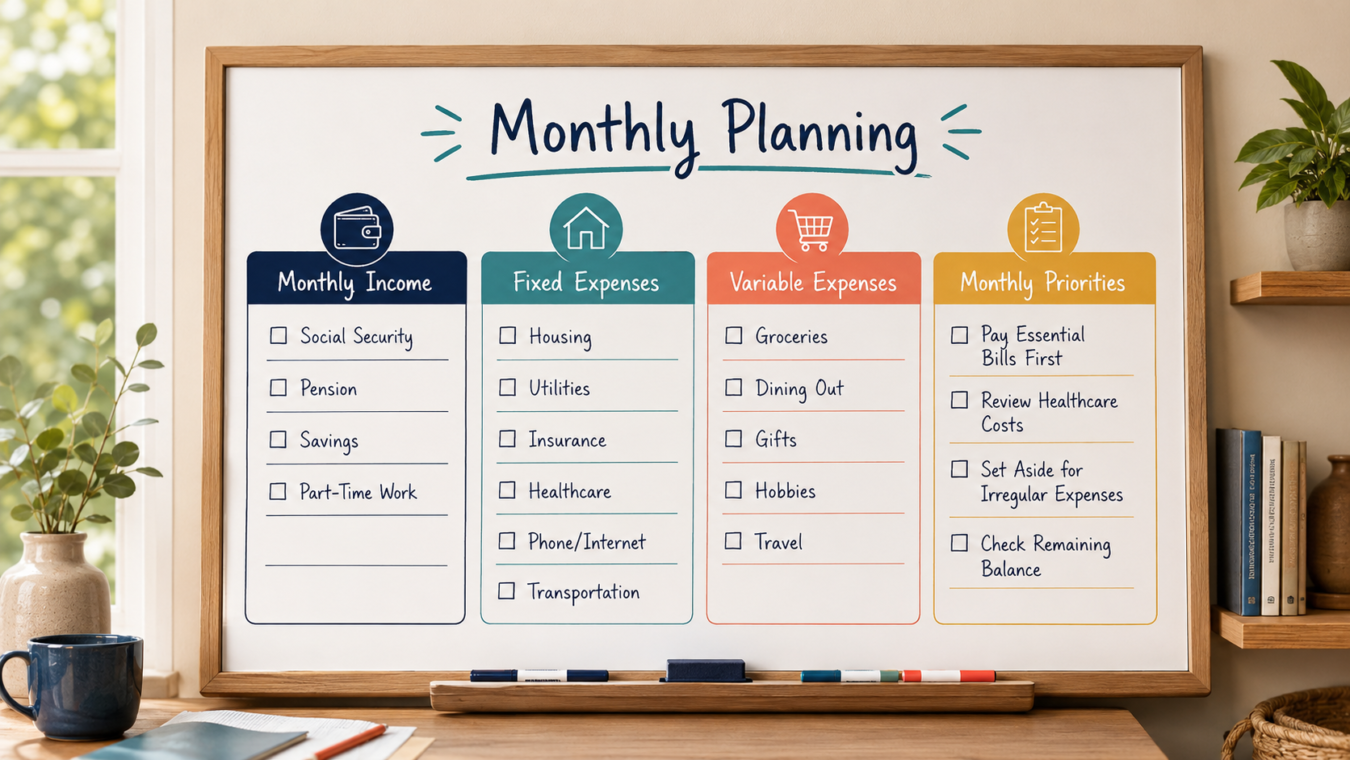
Retirement can change the way money flows in and out of your life.
During your working years, you may have relied on a regular paycheck. In retirement, your income may come from several different places, such as Social Security, a pension, savings, retirement accounts, or part-time work. At the same time, bills still arrive every month — housing, utilities, groceries, healthcare, insurance, transportation, and other needs.
When income and bills are not clearly organized, retirement can feel stressful even when money is available.
The goal is not to create a complicated system. The goal is simple: know what comes in, know what goes out, and understand whether your monthly life feels stable.
Start With Your Monthly Income
The first step is to list every source of income you receive.
Your retirement income may include:
- Social Security
- Pension benefits
- Retirement account withdrawals
- Personal savings
- Annuities
- Rental income
- Part-time work
- Support from other sources
Then ask:
How much income can I count on every month?
Some income may be reliable and predictable. Other income may change. For example, Social Security and pension income may arrive regularly, while savings withdrawals or part-time work may vary.
Separate your income into two categories:
Reliable income
This is income you can expect consistently each month.
Flexible income
This is income that may change or may only be used when needed.
Understanding the difference helps you avoid depending too heavily on income that is not guaranteed.
List Your Essential Monthly Bills
Next, write down your essential bills.
These are the expenses you need to maintain stability, health, housing, and daily life.
Essential bills may include:
- Rent or mortgage
- Property taxes
- Utilities
- Groceries
- Transportation
- Insurance
- Healthcare premiums
- Prescriptions
- Phone and internet
- Debt payments
- Home maintenance
- Emergency needs
Do not guess if you can avoid it. Look at recent bills, bank statements, or payment history so your numbers are realistic.
The key question is:
Can my reliable income cover my essential monthly bills?
If the answer is yes, your retirement may feel more stable. If the answer is no, that does not mean panic. It simply means you need a clearer plan.
Separate Needs From Lifestyle Expenses
Not every expense has the same priority.
Some expenses protect your basic life. Others support comfort, enjoyment, and personal goals.
Needs may include:
- Housing
- Food
- Healthcare
- Insurance
- Utilities
- Transportation
- Taxes
Lifestyle expenses may include:
- Dining out
- Travel
- Gifts
- Entertainment
- Hobbies
- Subscriptions
- Community activities
- Personal purchases
Lifestyle expenses are not wrong. They matter because retirement should include joy, purpose, and connection. But separating them from essentials helps you make better decisions when costs change.
If your budget feels tight, you can review lifestyle expenses first before touching your essential needs.
Create a Simple Monthly View
You do not need a complex spreadsheet to organize your retirement finances.
A simple monthly view can include three columns:
Income
List what comes in and when it arrives.
Bills
List what must be paid and when it is due.
Remaining amount
Track what is left after essential bills are covered.
This gives you a clear picture of your monthly rhythm.
You may want to organize bills by due date:
- Beginning of the month
- Middle of the month
- End of the month
This can help prevent late payments and reduce the stress of wondering what is coming next.
Plan for Irregular Expenses
Some expenses do not happen every month, but they still matter.
These may include:
- Property taxes
- Insurance renewals
- Car repairs
- Home repairs
- Medical procedures
- Dental care
- Vision care
- Gifts
- Travel
- Emergency expenses
A common mistake is forgetting these expenses until they arrive.
A helpful approach is to set aside a small monthly amount for irregular costs. Even if the amount is modest, it can reduce pressure later.
Ask:
What expenses do I know will happen, even if they do not happen every month?
Include Healthcare in the Monthly Plan
Healthcare should have its own place in your monthly review.
Even with Medicare, you may still have:
- Premiums
- Copays
- Deductibles
- Prescription costs
- Dental expenses
- Vision expenses
- Hearing care
- Out-of-pocket costs
Healthcare costs can change over time, so review them regularly.
Ask yourself:
- Are my prescriptions still affordable?
- Did my premiums change?
- Do I have upcoming appointments or procedures?
- Do I need to plan for dental, vision, or hearing care?
- Do I have money set aside for unexpected medical costs?
Healthcare planning protects both your finances and your independence.
Use Reminders and Automatic Payments Carefully
Automatic payments can be helpful, especially for regular bills. They can reduce missed payments and make life easier.
But automatic payments should still be reviewed.
Make sure you know:
- Which bills are automatic
- When they are withdrawn
- Which account they use
- Whether the amount changes
- Whether you still need the service
Also consider using reminders for bills that are not automatic.
The goal is to create convenience without losing awareness.
Review Your Plan Once a Month
A monthly review does not need to take long.
Once a month, ask:
- Did all expected income arrive?
- Were all essential bills paid?
- Did any bill increase?
- Did I spend more than expected?
- Do I need to adjust next month?
- Are there upcoming irregular expenses?
- Is my emergency cushion still available?
This habit can help you catch small issues before they become bigger problems.
Know When to Ask for Help
If organizing bills and income feels overwhelming, it is okay to ask for help.
You may speak with:
- A trusted family member
- A spouse or partner
- A nonprofit educator
- A qualified financial professional
- A legal or tax professional when needed
Asking for help does not mean giving up control. It means building clarity and protection.
Final Thoughts
Organizing monthly bills and income in retirement is one of the simplest ways to create financial clarity.
Start by listing reliable income, essential bills, lifestyle expenses, irregular costs, and healthcare needs. Then review the plan regularly so you can make informed decisions with less stress.
At EduFuture Foundation, we believe financial education should be clear, practical, respectful, and pressure-free. Our mission is to help older adults and families understand their options so they can manage retirement with more confidence and peace of mind.
To learn more about our educational programs, seminars, and financial counseling resources, visit edufuturefoundation.org.