

Pension, Savings, Social Security: How Do They Work Together?
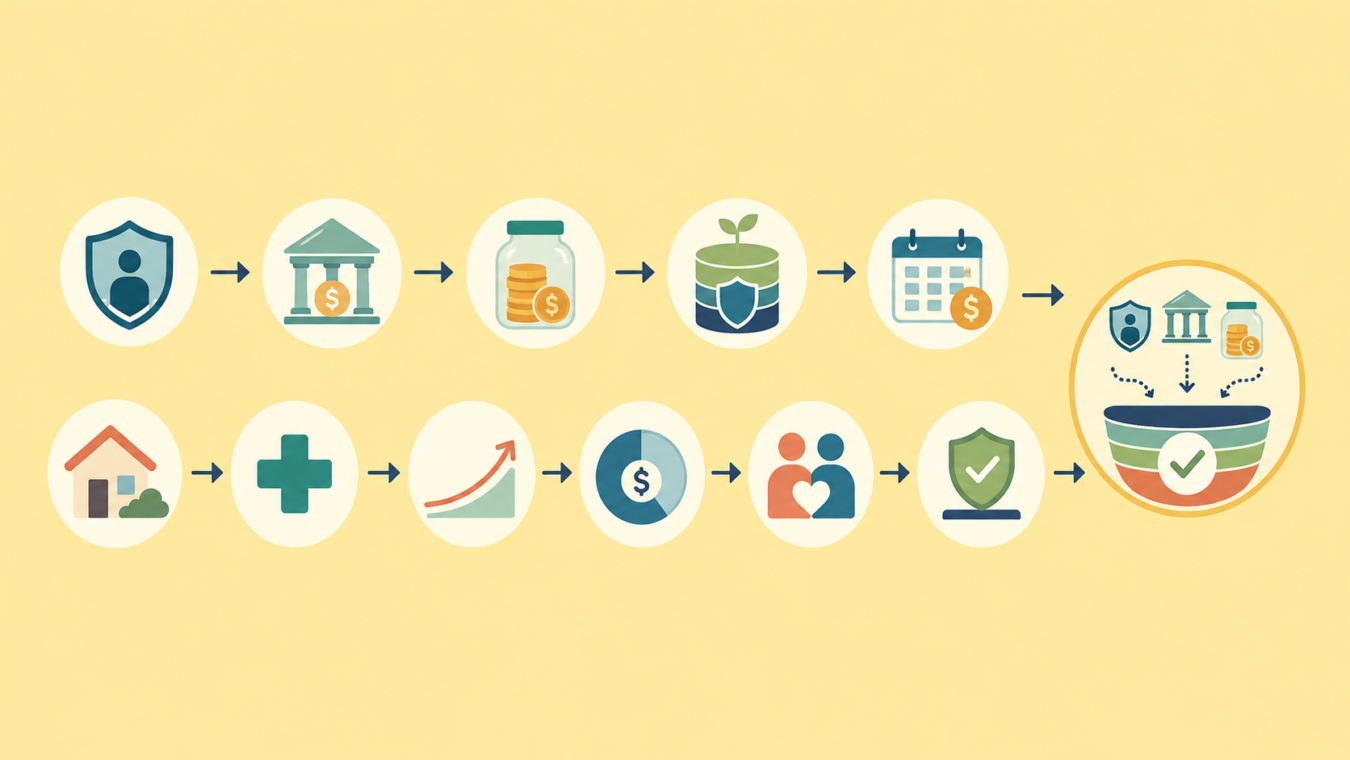
Retirement income can feel confusing because it often comes from more than one place.
During your working years, income may feel simple: you receive a paycheck, pay your bills, and plan around a regular schedule. In retirement, that paycheck may be replaced by several different sources, such as Social Security, a pension, savings, retirement accounts, annuities, or part-time work.
The challenge is not only having these income sources. The challenge is understanding how they work together.
A clear retirement income plan helps you see what money may come in, when it may arrive, how reliable it is, and how it can support your monthly life.
Why Retirement Income Needs to Be Coordinated
Social Security, pensions, and savings each play a different role.
One source may provide steady monthly income. Another may offer flexibility. Another may help cover emergencies, healthcare costs, or lifestyle goals.
When these pieces are not coordinated, retirement can feel uncertain.
You may wonder:
- Which income should I use first?
- Will my monthly income cover my expenses?
- How long will my savings last?
- What happens if healthcare costs rise?
- How does Social Security fit with my pension?
- Should I keep some savings available for emergencies?
The goal is not to make retirement complicated. The goal is to turn scattered resources into a clear monthly plan.
Social Security: A Reliable Foundation
Social Security is an important income source for many retirees. It can provide a monthly benefit that helps cover essential expenses.
However, Social Security was not designed to be the only source of retirement income. The Social Security Administration explains that benefits replace only a percentage of a worker’s pre-retirement income, depending on lifetime earnings and claiming age. For someone claiming at full retirement age in 2026, the replacement percentage can vary widely by earnings level.
That means Social Security can be a foundation, but for many people, it may need to be combined with other income sources.
Social Security may help cover:
- Housing
- Food
- Utilities
- Insurance
- Transportation
- Basic monthly needs
But it may not be enough for healthcare, inflation, debt, family support, travel, or unexpected expenses.
Pension Income: A Steady Monthly Source
A pension can provide predictable retirement income, depending on the type of pension and the options available to you.
For some retirees, a pension may work like a second paycheck. It may arrive monthly and help cover essential expenses. For others, pension decisions may involve choices such as survivor benefits, lump-sum options, or timing.
Before relying on pension income, it is important to understand:
- When payments begin
- Whether the amount is fixed or adjusted over time
- Whether a spouse can continue receiving income
- Whether taxes apply
- Whether there are different payout options
- How it fits with Social Security
A pension can be a powerful part of retirement income, but it should be reviewed carefully within the full plan.
Savings and Retirement Accounts: Flexibility and Control
Savings and retirement accounts often provide flexibility.
These may include:
- 401(k)
- 403(b)
- IRA
- Roth IRA
- Personal savings
- Investment accounts
- Emergency funds
Unlike Social Security or some pensions, savings may not automatically arrive as monthly income. You may need to decide when and how to use them.
Savings can help with:
- Income gaps
- Healthcare expenses
- Home repairs
- Emergencies
- Travel
- Family support
- Taxes
- Inflation pressure
The important question is not only, “How much do I have saved?”
A better question is:
How can my savings support my retirement without being used too quickly?
How These Sources Can Work Together
A practical retirement income plan assigns a purpose to each income source.
For example:
Reliable income can cover essentials
Social Security and pension income may help cover predictable monthly needs such as housing, utilities, food, insurance, and transportation.
Savings can provide flexibility
Savings and retirement accounts may help cover changing expenses, unexpected costs, healthcare needs, or lifestyle goals.
Other income can create breathing room
Part-time work, rental income, annuities, or other resources may help fill gaps or reduce pressure on savings.
The goal is to avoid treating every dollar the same. Each source has a role.
Timing Matters
One of the most important parts of retirement income planning is timing.
Social Security can generally begin as early as age 62, but claiming before full retirement age usually reduces the monthly benefit. Delaying past full retirement age can increase the monthly benefit until age 70.
This timing can affect how much you need from pensions or savings in the early years of retirement.
Ask yourself:
- When will Social Security begin?
- When will pension income begin?
- Will I need savings before those sources start?
- Will I retire before Medicare eligibility?
- How long should my savings last?
- What happens if I live longer than expected?
Timing can make the difference between a plan that feels stressful and one that feels more organized.
Do Not Forget Healthcare, Taxes, and Inflation
Retirement income planning should also include the costs that can change over time.
Healthcare, taxes, and inflation can all affect how far your income goes.
Before finalizing your plan, consider:
- Which income sources may be taxable
- What healthcare costs you expect
- Whether prescription costs may change
- Whether your pension has cost-of-living adjustments
- How inflation may affect groceries, utilities, housing, and insurance
- Whether your savings can help cover future increases
A plan that works today should also consider the years ahead.
Final Thoughts
Pension, savings, and Social Security can work together to create a clearer retirement income plan. Social Security may provide a foundation, pension income may add stability, and savings may provide flexibility.
The key is understanding the role of each source, how much income it may provide, when it begins, and how it supports your real monthly needs.
At EduFuture Foundation, we believe retirement education should be clear, practical, and pressure-free. Our mission is to help individuals and families understand their options so they can make informed decisions about their future.
To learn more about our educational programs, seminars, and financial counseling resources, visit edufuturefoundation.org.