

Should You Rent or Own in Retirement? Questions to Ask First
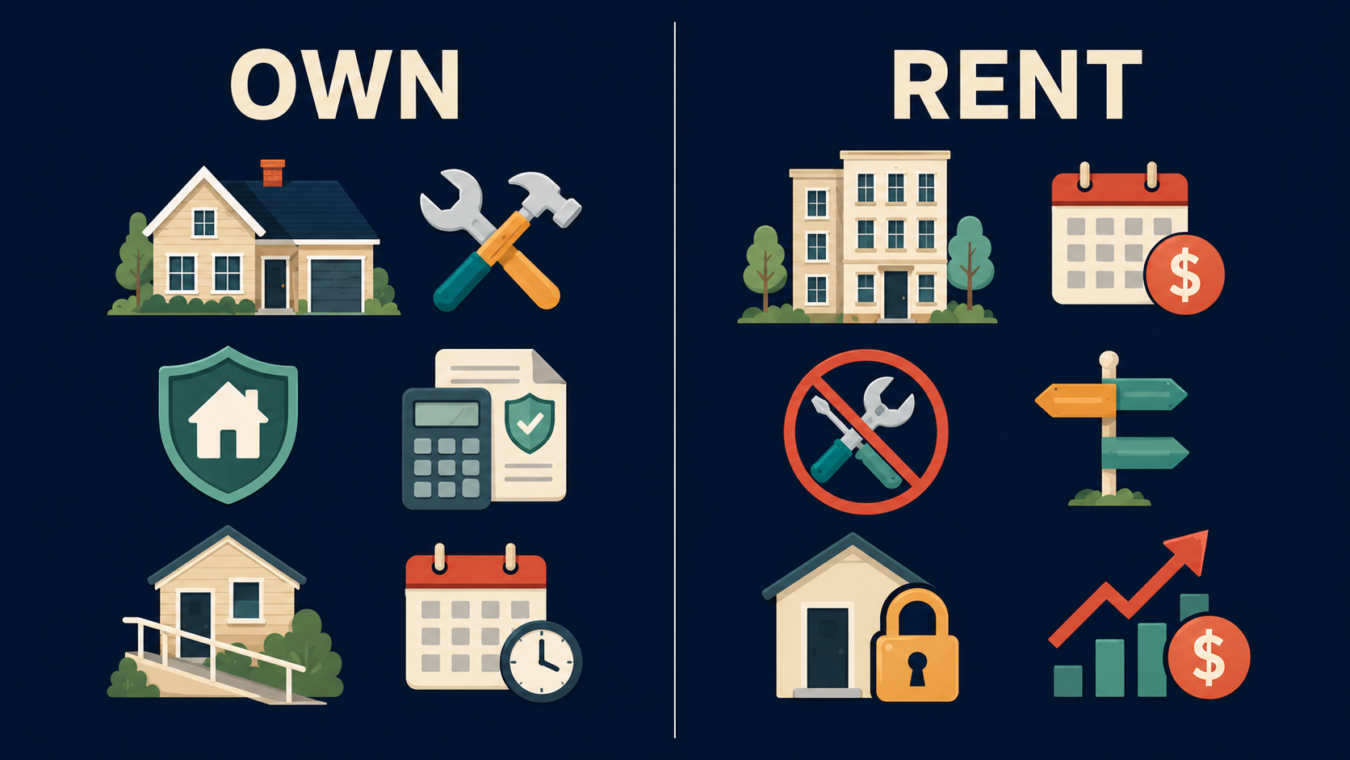
Housing is one of the biggest decisions in retirement.
For some people, owning a home feels like security, stability, and independence. For others, renting may offer flexibility, lower maintenance, and less responsibility. There is no one right answer for everyone.
The better question is not simply:
“Is it better to rent or own?”
The better question is:
“Which option supports my retirement income, health, lifestyle, family needs, and peace of mind?”
Before making a decision, it helps to review the full picture with clarity — not pressure.
Why This Decision Matters in Retirement
Your housing choice can affect more than your address.
It may affect:
- Monthly expenses
- Savings withdrawals
- Healthcare access
- Transportation
- Home maintenance
- Safety and accessibility
- Family support
- Lifestyle flexibility
- Long-term stability
A home that made sense during your working years may or may not fit your retirement life today.
That is why renting and owning should be compared based on your real needs now and in the future.
Start With Your Monthly Budget
The first question to ask is:
What can I comfortably afford each month?
If you own, your housing costs may include:
- Mortgage payment, if any
- Property taxes
- Homeowners insurance
- Utilities
- Repairs
- Maintenance
- Homeowners association fees
- Lawn care or snow removal
- Accessibility updates
If you rent, your housing costs may include:
- Monthly rent
- Renters insurance
- Utilities
- Parking fees
- Pet fees, if applicable
- Possible rent increases
- Moving costs if you need to relocate
Owning may feel more stable, but maintenance and taxes can rise. Renting may feel simpler, but rent can increase and you may have less control.
The key is to compare the full monthly cost, not just one payment.
Consider Maintenance and Responsibility
Owning a home usually means you are responsible for repairs and upkeep.
That may include:
- Roof repairs
- Plumbing
- Heating and cooling systems
- Appliances
- Yard work
- Snow removal
- Cleaning
- Safety updates
In retirement, these responsibilities can become more stressful, costly, or physically difficult.
Renting may reduce maintenance responsibility, especially if the landlord or community handles repairs. However, you may have less control over how quickly repairs are completed or what changes you can make to the home.
Ask:
Do I want more control, or do I want fewer responsibilities?
Your answer may change as your health, energy, and lifestyle change.
Think About Stability vs. Flexibility
Owning can provide a sense of stability.
You may feel rooted in your neighborhood, close to memories, and more in control of your space.
Renting can provide flexibility.
It may be easier to move closer to family, downsize, test a new area, reduce home responsibilities, or adjust if your health or income changes.
Ask yourself:
- Do I want to stay in one place long-term?
- Do I want the option to move more easily?
- Am I considering living closer to family?
- Could my healthcare needs change?
- Would I want to try a new state, community, or lifestyle before committing?
Stability and flexibility are both valuable. The right choice depends on what you need most.
Review Healthcare and Transportation Access
Whether you rent or own, location matters.
Ask:
- How close am I to doctors?
- Is there a hospital or urgent care nearby?
- Is my pharmacy easy to reach?
- Can I get groceries and essentials easily?
- Is public transportation available?
- Do I still feel comfortable driving?
- Are sidewalks, lighting, and crosswalks safe?
- Would I be isolated if I stopped driving?
A less expensive home may not be a better choice if it makes healthcare or transportation harder.
Housing should support independence, not create daily obstacles.
Consider Safety and Accessibility
Your home should support safe daily living.
Whether renting or owning, review:
- Stairs
- Bathroom safety
- Lighting
- Flooring
- Entryways
- Hallways
- Laundry location
- Parking access
- Emergency access
- Ability to add grab bars or ramps
If you own, you may have more freedom to make modifications.
If you rent, you may need permission for certain changes.
Ask:
Can this home support me if my mobility changes?
Planning ahead can help you avoid rushed housing decisions later.
Think About Family Support
Housing decisions can affect family.
If you own, family may eventually need to help with maintenance, repairs, emergencies, paperwork, or future decisions.
If you rent, family may need to help with moves, lease decisions, or finding a new place if circumstances change.
Discuss:
- Who would help in an emergency?
- Would moving closer to family make sense?
- Do family members understand your housing wishes?
- Are financial boundaries clear?
- Would your spouse or loved one be protected if something happened?
A housing choice should support both independence and realistic support.
Review Long-Term Costs
Renting and owning can both become more expensive over time.
Owning may involve:
- Rising property taxes
- Rising insurance premiums
- Major repairs
- Accessibility updates
- Home maintenance
- Utility increases
Renting may involve:
- Rent increases
- Lease changes
- Limited control over the property
- Possible relocation
- Less ability to build or preserve home equity
Ask:
What could this choice cost me five or ten years from now?
A decision that works today should also be reviewed for future stability.
Do Not Decide Based on Pressure
Be careful if someone tells you there is only one correct answer.
Renting is not automatically “throwing money away.” Owning is not automatically the safest option.
The right decision depends on your income, savings, health, location, family support, maintenance ability, and lifestyle goals.
Before deciding, ask:
- Do I understand the full cost?
- Does this option support my independence?
- Can I afford it without draining savings too quickly?
- Does it support healthcare access?
- Does it fit my lifestyle today?
- Would it still make sense if my needs change?
A good housing decision should feel clear, not rushed.
Final Thoughts
Renting or owning in retirement is not only a financial question. It is a life-planning question.
Before choosing, review monthly costs, maintenance, stability, flexibility, healthcare access, transportation, safety, accessibility, family support, and long-term affordability.
At EduFuture Foundation, we believe retirement education should help older adults make decisions with clarity, dignity, and confidence. Housing is part of that conversation because where you live can shape your income, health, independence, and peace of mind.
To learn more about our educational programs, seminars, and financial counseling resources, visit edufuturefoundation.org.