

What Documents Should Your Family Be Able to Find in an Emergency?
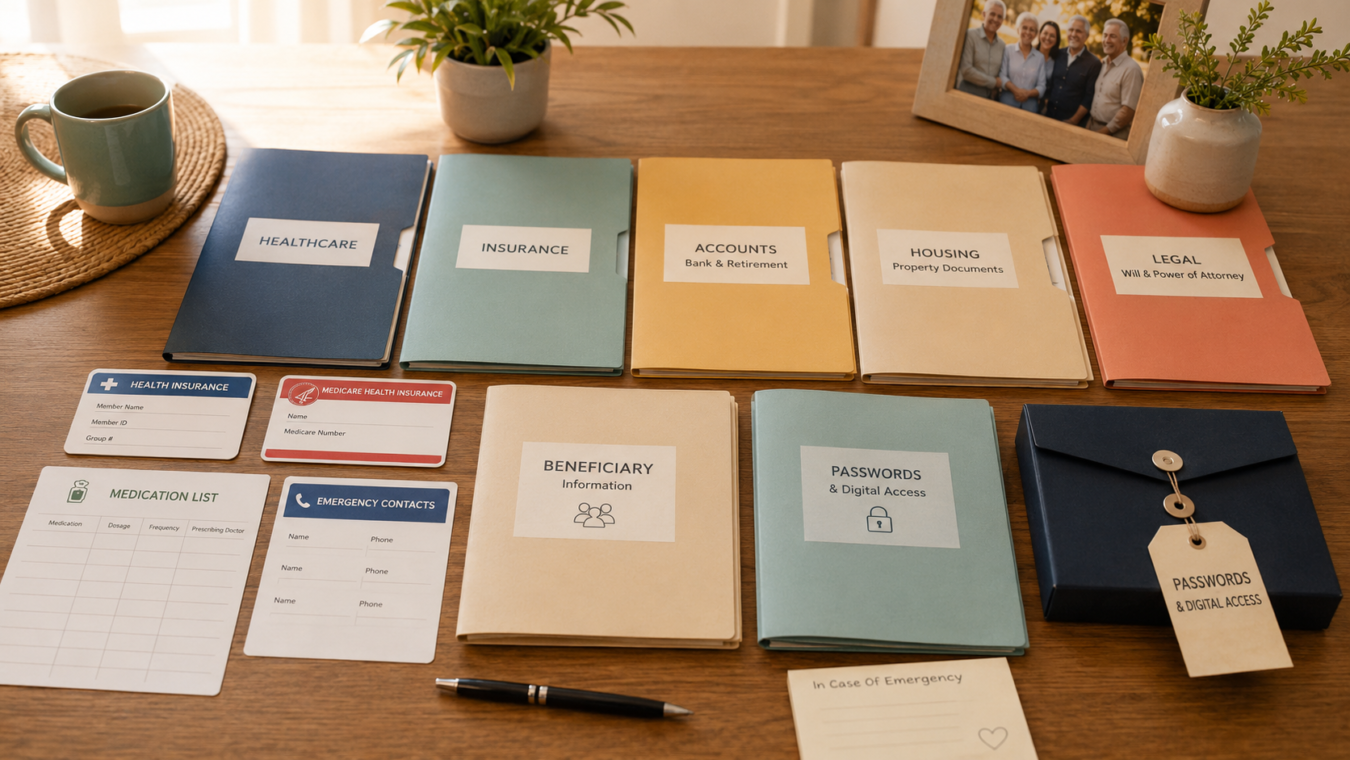
In an emergency, your family should not have to guess where important information is kept.
If something unexpected happens — a hospital visit, sudden illness, accident, home emergency, or urgent financial issue — your loved ones may need to act quickly. They may need to contact doctors, find insurance details, pay important bills, understand your wishes, or know who to call.
Without organized documents, even a caring family can feel overwhelmed.
Preparing these documents is not about giving up control. It is about protecting your independence, reducing confusion, and helping your family support you with dignity when it matters most.
Why Document Organization Matters
Many families avoid this topic because it feels uncomfortable.
But organizing important information is one of the most practical steps you can take in retirement. It can help prevent delays, missed bills, family disagreements, and unnecessary stress during already difficult moments.
Your family does not need unlimited access to everything today. But at least one trusted person should know:
- Where important documents are stored
- Who to contact in an emergency
- What information may be needed quickly
- How to access key instructions if you cannot provide them yourself
The goal is clarity, not loss of privacy.
Healthcare Documents
Healthcare information is often needed first in an emergency.
Your family should be able to find:
- Medicare card or health insurance cards
- List of doctors and specialists
- Current medication list
- Pharmacy information
- Allergies or medical conditions
- Recent medical instructions, if applicable
- Emergency contact information
- Healthcare power of attorney, if you have one
- Advance directive or living will, if applicable
This information can help loved ones communicate with medical providers and avoid delays.
Even a simple written medication list can be very helpful if you are unable to speak for yourself.
Insurance Information
Insurance documents can affect healthcare, housing, vehicles, and family protection.
Consider organizing:
- Health insurance information
- Medicare or supplemental plan details
- Prescription drug plan information
- Life insurance policies
- Homeowners or renters insurance
- Auto insurance
- Long-term care insurance, if applicable
- Contact information for insurance providers
Make sure your family knows where to find policy numbers and provider contact details.
They do not need to memorize the information. They simply need to know where it is.
Financial Account Information
In an emergency, bills may still need to be paid and accounts may need to be identified.
Your family should be able to locate basic information about:
- Bank accounts
- Retirement accounts
- Pension information
- Social Security payment information
- Annuities
- Investment accounts
- Credit cards
- Loans or debts
- Mortgage or rent information
- Utility accounts
- Automatic payments
You may not want to share balances or passwords with everyone, and that is understandable. But a trusted person should know where account information is stored and who to contact if needed.
Housing and Property Documents
Your home is often one of the most important parts of your retirement life.
Organize documents related to:
- Mortgage or lease agreement
- Property deed, if applicable
- Property tax information
- Homeowners association information
- Home insurance
- Utility providers
- Home repair contacts
- Security system details
- Vehicle title or registration
- Safe deposit box information, if applicable
If your family needs to help manage the home during an emergency, these details can prevent confusion.
Legal Documents
Legal documents are especially important because they can guide decisions when you cannot speak or act for yourself.
These may include:
- Will
- Trust documents, if applicable
- Durable power of attorney
- Healthcare power of attorney
- Advance directive or living will
- Beneficiary designations
- Funeral or final wishes, if you have written them
- Attorney contact information
If you do not have these documents, it may be worth speaking with a qualified legal professional. EduFuture Foundation does not replace legal advice, but we encourage families to understand which documents may matter before a crisis happens.
Beneficiary Information
Beneficiary information should be reviewed regularly because life changes.
Your family should know where to find beneficiary details for:
- Retirement accounts
- Life insurance
- Annuities
- Bank accounts, if applicable
- Investment accounts
- Other accounts with named beneficiaries
Outdated beneficiaries can create confusion or conflict. Reviewing this information once a year can help ensure your wishes are current.
Password and Digital Access Instructions
Today, many important accounts are online.
Your family may need access to:
- Online banking
- Insurance portals
- Utility accounts
- Phone accounts
- Password manager instructions
- Subscription accounts
- Cloud storage or digital files
Be careful with how you store this information. Passwords should be kept securely, not written in an obvious place where anyone can find them.
You may consider using a trusted password manager or secure written instructions stored in a safe location.
A Simple Emergency Contact Sheet
One of the easiest tools to create is a one-page emergency contact sheet.
It can include:
- Primary emergency contact
- Doctors
- Pharmacy
- Insurance providers
- Attorney
- Financial professional
- Trusted family members
- Close neighbors
- Home repair or maintenance contacts
- Preferred hospital, if applicable
This sheet can save time when emotions are high.
Where Should You Keep These Documents?
Choose a secure but accessible location.
Options may include:
- A clearly labeled folder
- A home safe
- A secure file cabinet
- A trusted digital folder
- Copies with a trusted person
- Instructions for where originals are stored
Tell at least one trusted person where to find the information.
Do not hide documents so well that no one can locate them when needed.
Final Thoughts
Organizing emergency documents is one of the most caring things you can do for your family.
It protects your wishes, supports your independence, and gives loved ones the clarity they need during difficult moments.
Start simple. Organize healthcare information, insurance, accounts, legal documents, housing details, beneficiaries, passwords, and emergency contacts. Then review them once a year or after major life changes.
At EduFuture Foundation, we believe financial education should be clear, practical, respectful, and pressure-free. Our mission is to help older adults and families understand the decisions that shape retirement so they can move forward with confidence and peace of mind.
To learn more about our educational programs, seminars, and financial counseling resources, visit edufuturefoundation.org.